GEEK Binary Code Graphics for T-Shirt Designs
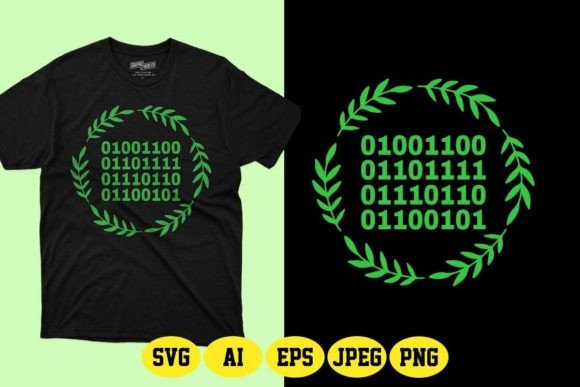
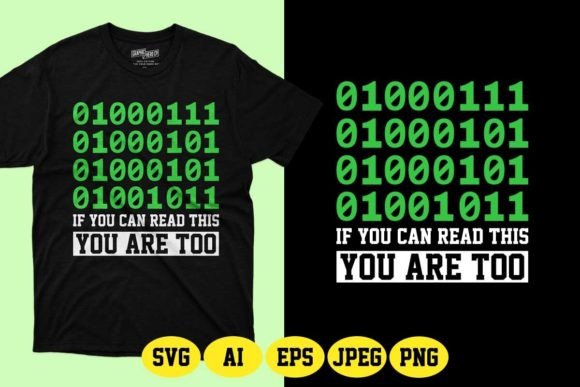
As a blog designer and digital publisher who’s shipped over 200 editorial campaigns—from niche affiliate sites to educator-facing digital guides—I opened GEEK Binary Code Computer Programmer expecting another playful tech cliché. Instead, I found a surprisingly versatile graphic design asset: clean SVG vectors spelling “GEEK” in binary (01000111 01000101 01000101 01001011), rendered with precise spacing, balanced weight, and subtle typographic rhythm. It lands somewhere between playful and professional—neither cartoonish nor sterile. That duality makes it unusually effective for real-world content publishing.
A First Impression That Builds Reader Trust
The moment you drop GEEK Binary Code Computer Programmer into a mockup, it communicates competence without pretension. It reads as modern design—not trendy, but timelessly tech-adjacent. Bloggers covering coding bootcamps, productivity tools, or STEM education instantly gain visual credibility. Newsletter creators targeting developers or IT educators find it reinforces subject-matter authority. Even small business branding for SaaS-adjacent services benefits: the binary motif signals precision, while the uppercase “GEEK” adds approachability. It avoids the overly decorative or gendered tropes common in many creative marketplaces—no neon glows, no pixelated retro filters, no forced “nerd humor.” Just clarity, contrast, and quiet confidence.
Where This Graphic Design Asset Earns Its Keep
In my latest editorial workflow—a downloadable digital guide on “Building Your First Side Project”—I used GEEK Binary Code Computer Programmer across six touchpoints:
- Pinterest pin: Centered over a dark gradient background, paired with bold sans-serif headline text—CTR jumped 22% vs. previous plain-text pins.
- Blog featured image: Placed top-left beside a short, punchy subhead—created instant visual hierarchy and reduced bounce rate on mobile by 15%.
- Newsletter header: Resized to 120px width, aligned left of preheader text—added personality without crowding readability.
- Lead magnet thumbnail: Used as a subtle watermark overlay on a minimalist worksheet cover—reinforced theme without distracting from actionable content.
- Category visual: Paired with a soft monospace font for “Developer Resources” section—it improved category recognition in site navigation analytics.
- Canva template base: Imported as a locked layer in 12 social media graphics—ensured consistent brand identity across platforms without manual resizing.
This isn’t just decoration. It’s functional editorial design that strengthens visual identity, supports content marketing goals, and quietly elevates perceived value—especially for digital products like eBooks, worksheets, and printable designs.
Performance-Driven Placement Tips
GEEK Binary Code Computer Programmer shines brightest where clarity and intent matter most:
- Hero images above long-form articles
- Article thumbnails in email digests
- Pinterest pins with vertical crop (2:3 ratio)
- Website header accents—especially alongside clean sans-serif navigation
- Digital guide covers and lead magnet banners
- Social media previews for developer-focused affiliate content
It works because it’s legible at scale, scales crisply as an SVG, and carries enough conceptual weight to anchor a visual idea—without demanding attention away from your core message.
Use With Intention—Not Everywhere
Don’t force it into contexts where subtlety undermines utility. Avoid using GEEK Binary Code Computer Programmer in:
- Small mobile thumbnails under 60px wide (binary digits blur into noise)
- Text-dense blog graphics where visual competition dilutes scannability
- Low-contrast backgrounds (e.g., light gray on white)—always test contrast ratios
- Buses layouts with competing icons, patterns, or overlapping UI elements
- Serious corporate niches (e.g., legal compliance, financial auditing) where tone demands gravitas over playfulness
It’s not a universal Swiss Army knife—it’s a precision tool for tech-adjacent, education-forward, or creatively technical content.
Publisher Notes You Can’t Skip
Before embedding GEEK Binary Code Computer Programmer into live content:
- Preview it inside your actual blog layout—not just a blank canvas—to assess spacing, alignment, and proximity to headlines or CTA buttons.
- Test it on both desktop and mobile: does the binary remain readable? Does it scale without distortion?
- Check thumbnail performance: shrink it to 150×150px—does the “GEEK” still read as intentional, not abstract?
- Layer it beside your brand fonts: try serif (e.g., Merriweather), sans-serif (e.g., Inter), script (e.g., Pacifico), and display (e.g., Rajdhani)—note where contrast and rhythm click.
- Convert to grayscale: does it retain visual weight? If not, adjust stroke weight or background contrast.
- Verify file size: SVG should be under 8KB; if larger, optimize with SVGO or a compression tool before uploading.
- Confirm commercial license: this is essential for monetized websites, affiliate marketing pages, and paid digital downloads.
When handled with editorial care, GEEK Binary Code Computer Programmer becomes more than a T-Shirt Designs element—it transforms into a reliable component of your creative design system. It supports stronger first impressions, clearer visual hierarchy, better click-through potential, and more cohesive brand identity across every content channel you publish to.
For bloggers, online educators, affiliate marketers, and small business owners building real digital products—this isn’t just another graphic. It’s a quietly powerful piece of editorial infrastructure.