This Guy Loves Camping with His Wife
A Designer’s First Look: Warm, Worn-In, and Ready for Stitching
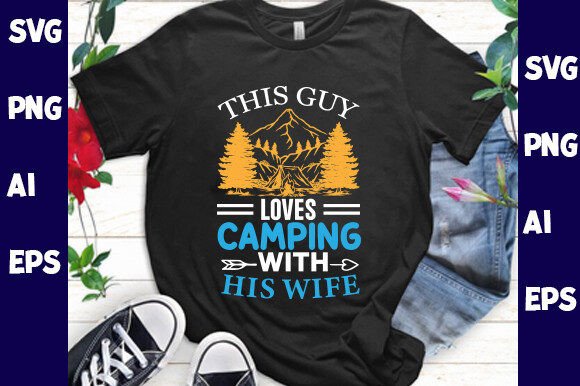
When I opened This Guy Loves Camping with His Wife, I didn’t see just another graphic—I saw a story waiting to be stitched. The composition is relaxed but intentional: a friendly silhouette of a man and woman beside a simple tent, pine trees framing the scene, and clean, rounded typography that feels handwritten but legible. It’s not overly detailed or fussy—no tiny campfire embers or intricate gear—and that’s exactly why it works so well as a machine embroidery design. It breathes. It leaves room for fabric texture, thread variation, and the gentle imperfections that make handmade products feel human.
Where This Guy Fits Best—Real Projects, Not Just Pixels
Last week, I prepped this design for a custom embroidered tote bag for a local outdoor gear shop’s Mother’s Day pop-up. We chose a natural canvas with medium-weight cotton twill—just sturdy enough to hold the stitch without buckling. The result? A warm, approachable piece that customers paused to read aloud and smile at. That’s the quiet strength of This Guy Loves Camping with His Wife: it lands emotionally before it registers visually.
It shines on sweatshirt embroidery—especially midweight fleece—where the slightly bolder lines hold up beautifully against nap and stretch. On baby embroidery? I’d scale it down to 3.5" wide and pair it with soft pastel thread on organic cotton onesies; the theme reads sweet, not kitschy. As a patch? Yes—stitch it cleanly on twill backing, then heat-press onto denim jackets or backpacks. And for holiday embroidery? Think rustic kitchen towels or linen pillow covers—this design adds personality without overwhelming.
What to Watch For—Practical Embroidery Realities
This isn’t a dense fill-stitch jungle—it’s built for clarity, not coverage. That means it performs well on textured fabrics like terry cloth or looped cotton, where heavy designs can disappear into the pile. But because the lettering relies on clean curves and moderate stroke weight, avoid using it on ultra-thin fabrics (like lightweight rayon challis) without extra stabilizer support. On dark fabric, test your thread colors first: a warm charcoal gray or olive green reads richer than black, especially in satin stitch areas.
Caps and curved surfaces are doable—but only if you’re using a smaller hoop size (4" or less) and a low-profile stabilizer. The design’s balanced width helps, but those outer pine branches get delicate near the edges. If stitching on stretchy fabric (like performance knit tees), always use cutaway stabilizer—not tear-away—to prevent puckering around the outline. And while it’s not an applique design, keep in mind that any satin-stitched text benefits from a slight underlay to lock down the base layer.
Stitch Density & Detail Level: Honest Assessment
The file leans toward moderate stitch density—no overloading, no unnecessary travel stitches. That’s good news for commercial embroidery runs and small-shop efficiency. You won’t need to manually edit jump stitches or rework tension-heavy zones. Still, inspect the inner corners of the tent shape and the curve of the “o” in “Love”—those spots can blur if thread tension is off or fabric shifts mid-hoop. Always run a test on scrap fabric that matches your final product’s weight and weave.
How It Shapes Your Brand—and Your Buyer’s Experience
As an Etsy seller or craft business owner, you know that every personalized gift carries unspoken expectations: sincerity, care, and visual cohesion. This Guy Loves Camping with His Wife delivers that quietly. It doesn’t shout. It invites. Customers who buy it aren’t just buying a phrase—they’re buying shared values: simplicity, partnership, adventure. That translates directly into higher perceived value on finished products like embroidered aprons for wedding favors or pillow covers for cabin rentals.
It also supports brand consistency across listings. Use it in your printable mockups alongside neutral backgrounds and real-life photos—no stock poses needed. The design’s warmth makes even basic product shots feel authentic. And because it avoids trendy fonts or fleeting references, it stays relevant across seasons and customer age groups.
Designer Notes You’ll Actually Use
- Test first—on scrap fabric matching your final project’s weight, stretch, and color.
- Check thread color contrast on both light and dark fabric backgrounds before stitching full runs.
- Review stitch density in your embroidery software—if it looks sparse in preview, add a light underlay to key outlines.
- Confirm hoop size early—this design scales cleanly between 3" and 5", but anything beyond 5.5" risks thinning out the line weight.
- Inspect small details like the curve of the “w” in “with” and the spacing between “Camping” and “with His Wife.” Adjust if needed for your machine’s capabilities.
- Use proper stabilizer—cutaway for knits, medium-weight tear-away for stable wovens, and fusible for lightweight linens.
- Verify licensing before selling finished items or bundling this as part of a digital embroidery file pack—especially for commercial embroidery or resale on platforms like Etsy.
- Try black-and-white mockups to assess readability and balance without color distraction.
Final Thought: Not Just a Graphic—A Conversation Starter
This Guy Loves Camping with His Wife doesn’t try to be everything. It’s not a complex logo, a technical vector, or a high-detail portrait. It’s a well-paced, thoughtfully paced graphics piece designed to translate gracefully from screen to stitch to shelf. Whether you’re building a small shop product line, preparing a batch of custom apparel, or crafting a heartfelt personalized gift, this design earns its place—not because it’s flashy, but because it feels true. And in embroidery, truth stitches deeper than trend.