I’m the Best Thing My Wife Ever Found
A Designer’s First Glance: Charm, Clarity, and Commercial Sense
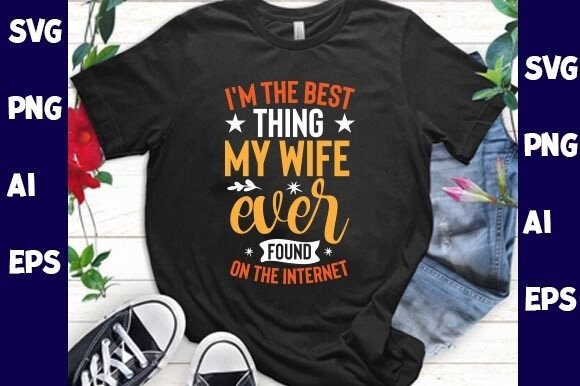
When I opened I’m the Best Thing My Wife Ever Found for the first time, I wasn’t looking for a novelty—I was scanning for craft viability. The layout is clean, centered, and intentionally conversational: rounded sans-serif lettering with gentle spacing, no excessive flourishes or decorative borders. It reads like something you’d stitch on a soft cotton tote for a Father’s Day gift—not a flashy festival tee, but a quiet, confident declaration. There’s warmth in the phrasing, sincerity in the simplicity. That matters. In embroidery, tone translates directly into perceived value. This isn’t shouting; it’s smiling across a kitchen table.
Where It Lives Best: Real Projects, Not Just Pixels
Last week, I used I’m the Best Thing My Wife Ever Found to embroider a lightweight linen apron for a local café owner’s husband—a personalized gift she planned to sell as part of her small shop’s “Couple Collection.” Why this design? Because it balanced personality with polish. On the apron’s chest pocket (hoop size: 4” x 4”), the lettering stayed legible without crowding, and the moderate height-to-width ratio kept proportions friendly—even at 3.5 inches tall. It also worked beautifully as a sweatshirt embroidery piece on midweight fleece: no distortion, no thread nesting, just crisp satin-stitched edges and even fill stitch density.
It’s equally effective on baby onesies—provided you scale down thoughtfully—and as a small embroidered patch sewn onto denim jackets or canvas backpacks. As a T-Shirt Designs asset, it leans into casual authenticity rather than trend-chasing. That makes it ideal for Etsy sellers curating heartfelt, non-generic collections: think holiday embroidery for anniversary gifts, wedding weekend swag, or nursery decor where humor meets tenderness.
Where Caution Applies: Fabric, Fit, and Function
This design shines on stable, medium-weight fabrics—cotton blends, twill, linen, and structured knits. But here’s what I watched closely:
- Thin or stretchy fabric? Requires cutaway stabilizer—not tear-away—to prevent puckering, especially around the curved baseline of “Found.”
- Dark fabric? Test thread colors first. A warm charcoal gray or deep navy thread reads richer than black on black, preserving readability without harsh contrast.
- Curved surfaces (like caps)? Avoid unless you’re using a cap frame and have confirmed the design fits within the front panel’s flat stitching zone. The line length and consistent stroke weight don’t adapt well to severe curvature.
- Small hoop sizes (<3” wide)? Not recommended. Scaling below ~2.75” risks losing clarity in the subtle spacing between letters—especially the apostrophe and “I’m.”
What It Adds (and Doesn’t Add) to Your Finished Product
I’m the Best Thing My Wife Ever Found elevates handmade presentation by doing one thing exceptionally well: it feels personal without being private. Customers recognize sincerity faster than they parse fonts—and that builds trust. When stitched cleanly, it signals care, not convenience. That perception lifts perceived value: buyers pay more for a custom-embroidered tea towel with this phrase than for the same towel with a generic “Dad Rocks” graphic.
It supports brand consistency for small shops because it’s versatile yet distinctive—no competing with clipart energy. And unlike many Graphics meant only for cutting machines, this design carries inherent embroidery logic: generous letter spacing allows airflow between stitches, reducing heat buildup and thread breaks during long runs. That’s crucial for commercial embroidery shops batching orders for boutique clients.
Practical Notes Every Embroidery Designer Should Run Through
- Test on scrap fabric first—same fiber content and weight as your final project.
- Check thread color contrast on both light and dark backgrounds before stitching the final piece.
- Review stitch density: if your machine flags high-density areas, confirm whether the file includes underlay or if manual adjustment is needed.
- Confirm hoop size compatibility before digitizing or loading—especially if adapting for caps or sleeves.
- Inspect small details at 200% zoom: look for stray nodes, overlapping paths, or unconnected outlines that could cause jump stitches.
- Test in black-and-white mockups to evaluate visual weight and hierarchy—color can mask imbalance.
- Use proper stabilizer for your fabric type and stitch count. Medium-cutaway works reliably across most use cases.
- Verify licensing terms before selling finished items or bundling this as part of a digital embroidery file pack—commercial rights aren’t implied by download alone.
Final Thought: A Design That Earns Its Place
I’m the Best Thing My Wife Ever Found isn’t flashy—but it doesn’t need to be. It’s the kind of embroidery file that earns repeat use because it delivers quietly: no surprises, no rework, no customer follow-ups asking “Can you make it bigger?” or “Why does it look blurry?” It fits naturally into real workflows—whether you’re stitching one-off personalized gifts or scaling production for a craft fair lineup. For designers, Etsy sellers, and small shop owners who value clarity over clutter, this is less of a graphic and more of a reliable collaborator. It reminds us that sometimes, the strongest statement in embroidery isn’t the boldest—it’s the truest.